
Miami-Dade Busted Mugshot Records
Three custodians hold the pieces of a Miami-Dade County arrest. The first is whoever made the arrest. That means the Miami-Dade Sheriff's Office or a city police department. Custody then passes to Miami-Dade Corrections and Rehabilitation, called MDCR, which runs county jail intake through the Turner Guilford Knight Correctional Center. TGK is the intake point for the whole agency. MDCR produces the booking entry and takes the intake photograph. Meanwhile, the Miami-Dade Clerk of the Court and Comptroller keeps the criminal case file that follows. The mugshot is just an identification photo taken during intake. The booking record reports custody facts at that moment. Initial charges can change, be declined, or be dismissed. So read any busted mugshot from Miami-Dade County alongside the later Clerk docket. That shows what actually happened with the case.
Miami-Dade Busted Booking Fields
The MDCR current-custody result gives enough detail to distinguish two people who share a name. It also helps move from jail custody to the court file. Compare several fields, not a face alone. A facility can change after TGK processing, and bond can change after a judge acts.
| Field | What it shows |
|---|---|
| Name, date of birth, race, sex | Administrative identity fields used to separate similar records. |
| Jail number | The local booking identifier and a direct search key accepted by Clerk CJIS. |
| Booking date and time | When intake was recorded, not necessarily the arrest or alleged offense time. |
| Current location | The MDCR facility shown when the search is run; placement may change. |
| Charges and bond | Charges and custody terms at that moment, subject to later court action. |
| Mugshot | The intake photograph tied to current county custody. |
The police affidavit can add an incident number, alleged facts, arrest location, and officer narrative. The Clerk docket can add filed counts, first appearance, arraignment, motions, pleas, orders, judgment, sentence, and disposition. An arraignment is the court stage at which a defendant responds to filed charges. Disposition means the documented way the case ended.
When Busted Mugshots Appear
Miami-Dade County names TGK as the post-arrest processing destination. During booking, MDCR records identity and booking data before a person may be classified and moved to another county facility. The online entry can then show booking time, current location, charges, bond, jail number, and the photograph.
No official page promises how long TGK intake takes to appear online. MDCR also publishes no refresh interval. A blank search result can mean intake is still underway, the spelling is wrong, release already occurred, another jurisdiction holds the person, or no county booking took place. It cannot establish that no arrest occurred. Booking at 786-263-5312 and Intake at 786-263-5305 are the official phone fallbacks.
See the MDCR field and photo explanation before treating an entry as current.
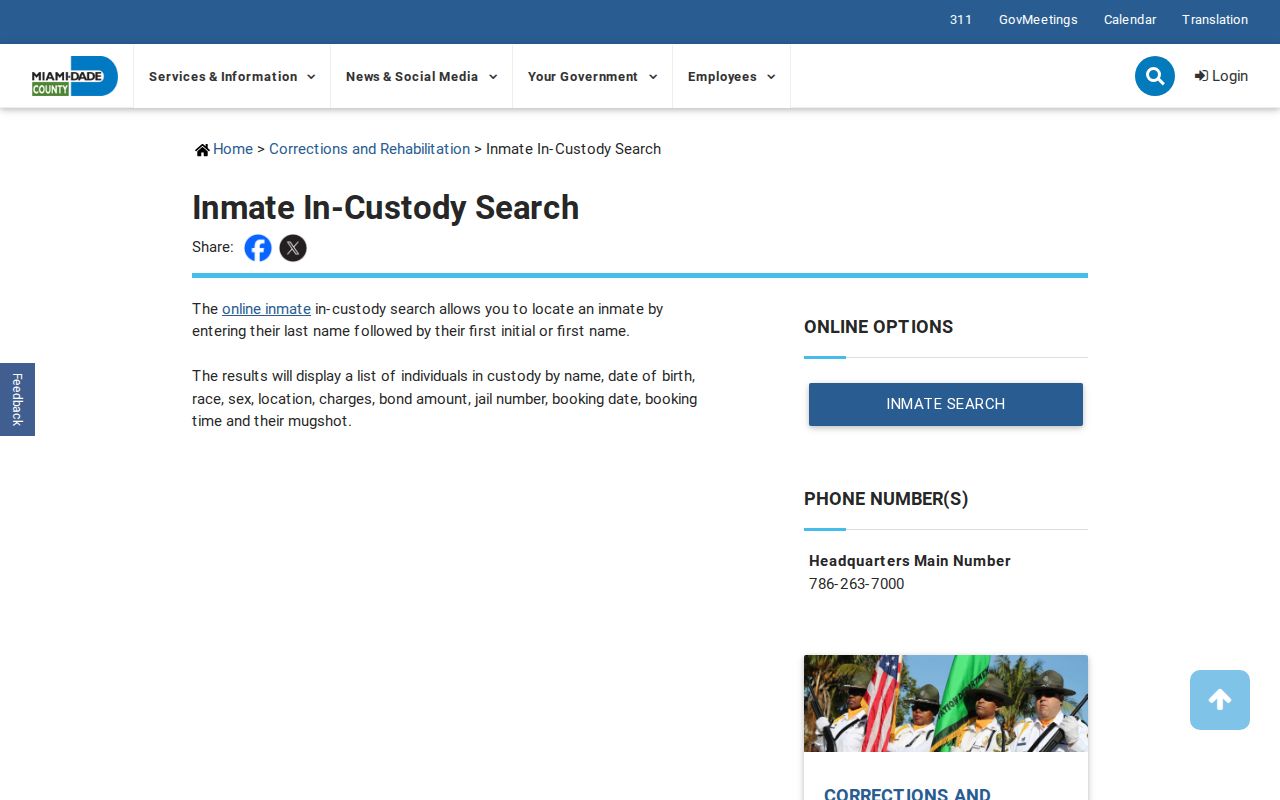
The official description confirms which fields display, but it does not create a historical roster or a posting-time guarantee.
Request Miami-Dade Booking Records
A released person's entry may leave the in-custody search. The booking report and intake photo must then be requested from MDCR Central Records, subject to exemptions and lawful redaction. Ask for one identified booking, not a broad set of faces. Police arrest affidavits belong with MDSO or the municipal department that made the arrest.
- Record the full name, jail number, and booking date or time from any known record.
- Ask MDCR for the booking report, booking or intake photograph, and release date tied to that booking.
- Ask the arresting agency separately for its arrest affidavit and releasable incident report.
- Request electronic delivery and a cost estimate before chargeable work begins.
2525 NW 62nd Street, Suite 4200
Miami, FL 33147
786-263-5892
MDCR lists 15 cents per single-sided page, 20 cents per double-sided page, and $1 per certified or color page. A disk is $1, while delivery and some material costs may be added. Work beyond 20 minutes can produce a labor charge, estimate, and request for partial advance payment. No fixed turnaround is promised.
The MDCR records request and fee page is the source for the current process.
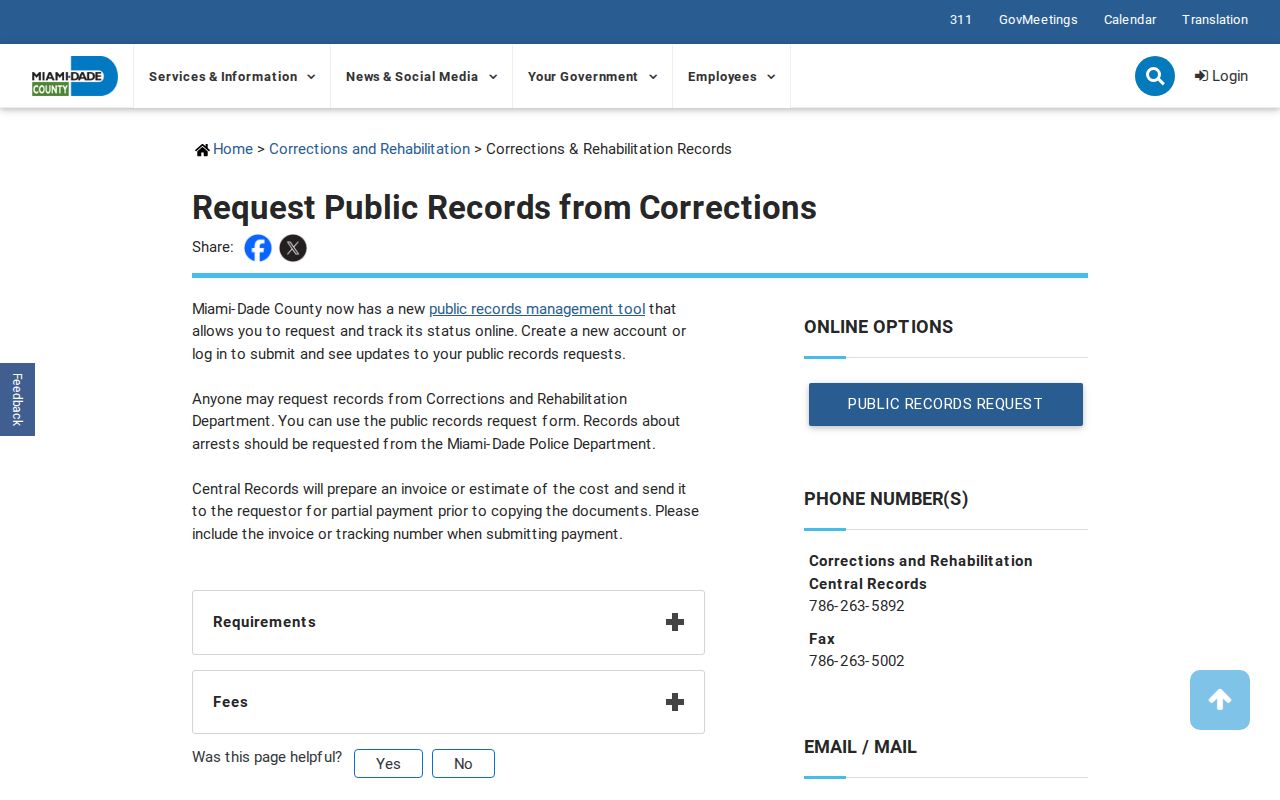
This request route is the key fallback when a busted mugshot is no longer visible in the live custody search.
Note: Florida generally does not require a requester to explain a purpose, but a focused request is easier to price and locate.
Miami-Dade Mugshot Request Costs
Miami-Dade's fee details matter because a vague request can trigger more research time. MDCR may charge for labor after the first 20 minutes, while its standard duplication rates remain tied to the form of the record. Ask for an estimate, set a cost ceiling, and allow redaction rather than demanding a whole unrelated file. Cash, cashier's check, and money order are listed payment forms.
MDSO publishes the same 15-cent single-sided, 20-cent double-sided, and $1 certified-page rates for sheriff police records. Its extensive research threshold is also more than 20 minutes. MDSO's service and contact pages disagree on the records fax number, so use the Central Records phone at 305-471-2085 to confirm before sending. The public counter is at 9105 NW 25th Street in Doral and runs Monday through Friday, 9:00 a.m. to 4:30 p.m.
Florida Busted Mugshot Law
Florida Chapter 119 creates broad access to nonexempt public records, but access is not absolute. A custodian must apply exemptions for protected information, active investigations, victims, juveniles, and sealed or expunged material. The adult MDCR roster should never be used as a juvenile search or as a route around a lawful restriction.
Florida Statutes section 901.43 governs certain commercial booking-photo publishers. A covered publisher cannot solicit or accept money to remove a photo. The subject or legal representative may send registered mail to the registered agent with proof of identity and the exact photo or page. When the statute applies, removal must be free and completed within ten calendar days after receipt. Subsection (5) limits which publishers are covered, so this is not a universal right to erase government records or news reports.
The official Florida booking-photograph statute provides the controlling text for that limited process.
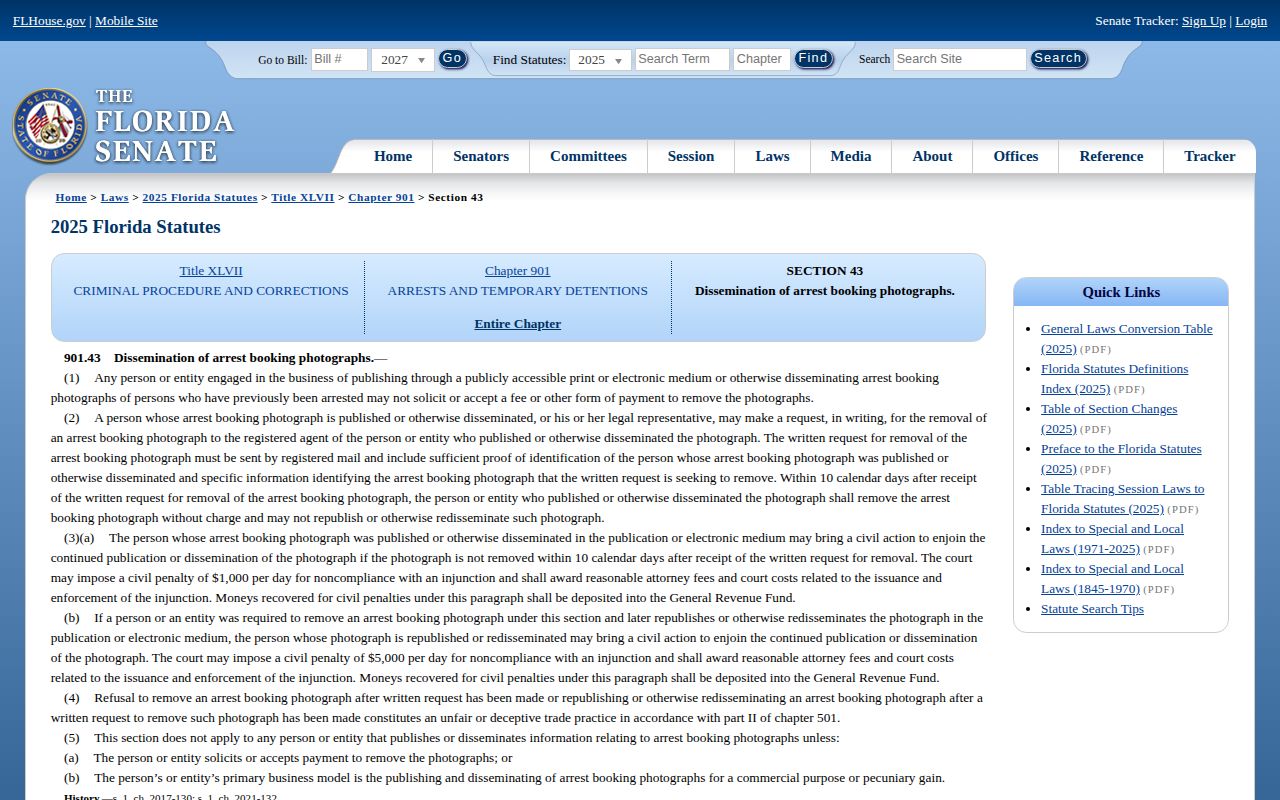
The statute page helps separate a covered commercial publisher from an official jail custodian, news outlet, or other entity that needs its own legal analysis.
Miami-Dade Arrest Record Relief
Clearing a Miami-Dade arrest record is really four separate jobs. Correction, sealing, publisher removal, and search-result cleanup each have their own path. Sealing and expunction go through FDLE. That road starts with a Certificate of Eligibility before any court petition. The certificate alone grants nothing. FDLE charges a $75 application fee. The fee is nonrefundable. Expect an eligibility review of about 12 weeks, with no expedited option. Qualification depends on the record itself and its disposition. The FDLE process hub gathers the eligibility rules and every required form in one place.
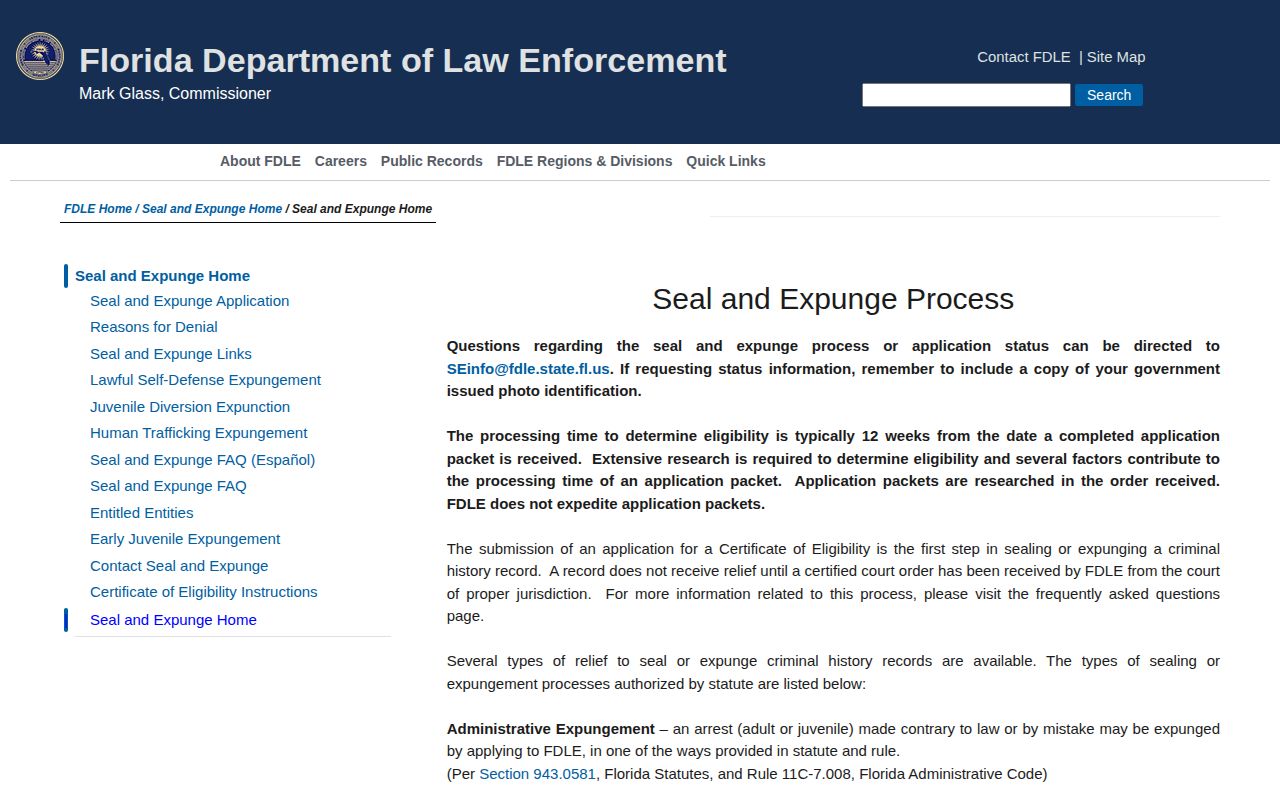
State relief is only one lane. Asking MDCR to fix a data field is a different request from asking an unofficial publisher to honor a free takedown. Busted Newspaper offers a free removal form; submit the post URL along with supporting court records. Mugshots.zone has a no-charge correction route for its Miami-Dade section too. Skip removal vendors entirely. Paying one or promoting its services buys nothing the free channels lack. Once a source corrects or deletes its page, a stale-cache request to the search engines can refresh what results show. That refresh cannot seal a court file, though. Only the court process can do that.
Miami-Dade Mugshot Access Limits
A local dispute shows why "public record" never promises every image stays visible. Miami-Dade faced questions about booking photos of arrested law-enforcement officers who invoked statutory address confidentiality. Exemptions like that, plus an agency's own legal reading, can shape whether a photo gets released. Read that narrowly, though. It does not mean every officer image is off limits today.
Sealed arrest information sits outside ordinary public content. Expunction is the court-ordered step that can pull qualifying records from public access. Sealing limits access without erasing the event for every lawful purpose. Juvenile and victim-related material carry separate limits of their own. When an official result has no photo, use the custodian's record process. Accept a lawful withholding. Never paste a copied face from an unofficial page into the gap.
Find Miami-Dade Busted Mugshots
The right source depends on where the person sits in the system. Start with the official county channel. Widen the net only if the record stage calls for it. One trap is worth knowing here. Miami-Dade's jail operator is MDCR, not MDSO. So a "sheriff jail roster" search aims you at the wrong custodian entirely.
- Search MDCR for a just-booked or currently held person, and confirm date of birth, jail number, booking time, and facility.
- If no result appears, check spelling, allow for intake, and call MDCR Booking or Intake. Identify the arresting agency.
- For a released person, request the historical booking record and photo from MDCR, then get the arrest report from police.
- Use Clerk CJIS to find filed charges, court events, and disposition after booking.
- Use FDC only for a sentenced state prisoner or person in covered state supervision. Check federal or ICE locators separately when relevant.
City arrest paths start with the municipal police records office. The same county intake system receives booked defendants from Miami, Hialeah, and Miami Gardens.
Miami-Dade Busted Jail Roster
The MDCR In-Custody Search is the only verified official online channel for Miami-Dade booking photos. The form asks for a last name plus a first name or initial, with a three-character minimum. It covers people held in county custody right now. It is not a log of every arrest.
| Search or result field | How to use it |
|---|---|
| Last name | Enter at least the indicated minimum and test spelling variants when needed. |
| First name or initial | Narrow common surnames without assuming one spelling is final. |
| Date of birth | Compare identity; do not rely on a name or face alone. |
| Jail number | Save it for MDCR calls, records requests, and Clerk CJIS. |
| Booking time, facility, bond | Read as current custody fields that may change. |
A careful roster check follows a short sequence.
- Enter the surname and first name or initial, then open the closest result.
- Match date of birth and jail number before relying on booking time, facility, bond, or photo.
- Save the jail number and check the Clerk docket for the filed case and later disposition.
The portal does display mugshots. What MDCR does not publish is an update schedule. Nor does it say how long an entry lingers after release. For someone already out, Central Records and the Clerk are the follow-through. No verified official MDCR or MDSO jail app with booking photos exists. The official MDCR current-custody form is where the lookup starts.
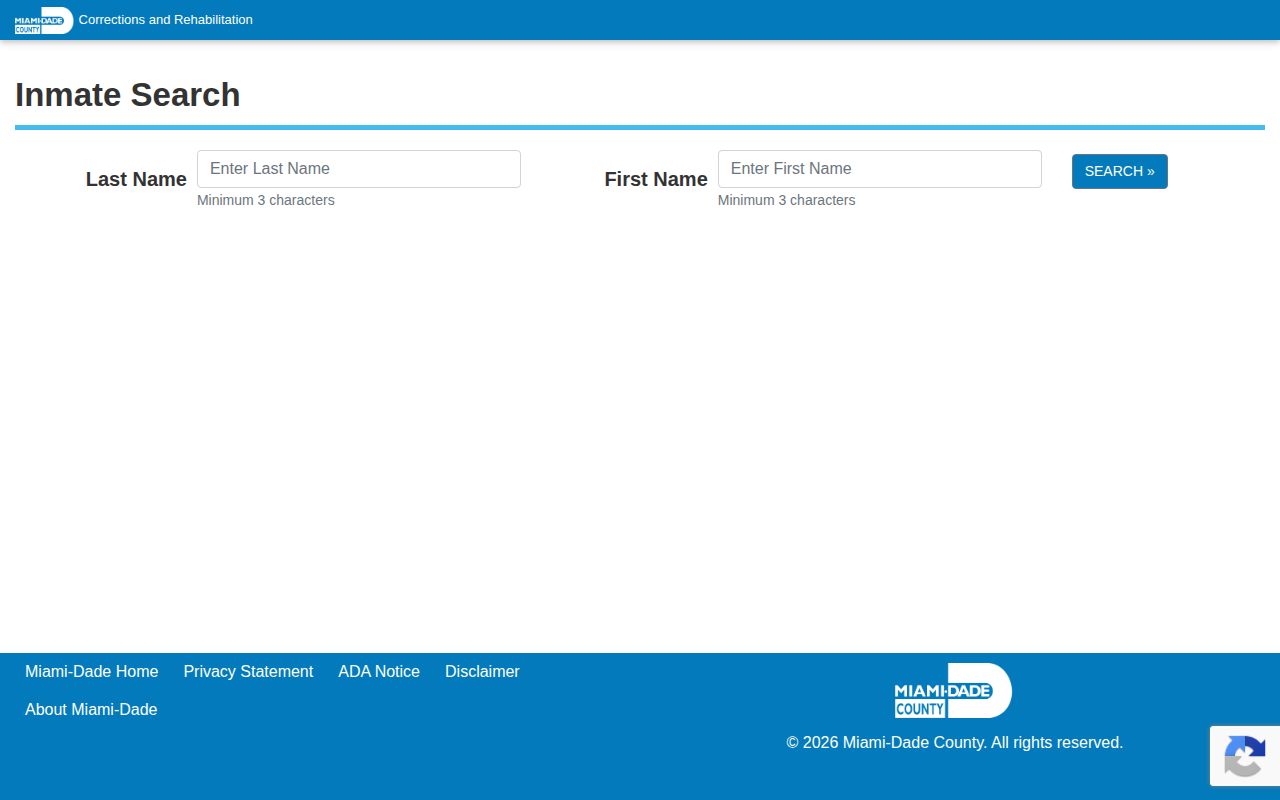
The name form returns individual custody results rather than a face gallery.
Note: A roster miss does not prove there was no arrest, because intake, release, transfer, or another jurisdiction may explain it.
Recent Miami-Dade Busted Bookings
Miami-Dade has no verified official booking feed by name for any window, whether 24 hours, 48 hours, 72 hours, or a week. The current roster cannot honestly be called "today's arrests." It may list people booked days ago. Someone booked and released fast may already be gone. No official archive of such named daily feeds checks out either.
The MDCR Daily Jail Population Statistics PDF is the county's one verified daily-style publication. It offers a dated aggregate snapshot with booked and released totals, facility and charge breakdowns, demographics, immigration holds, and multi-month trend charts. No names appear in it, and no mugshots either. It has no guaranteed publication hour. Treat it as a trends tool, not a way to see who got busted.
Need a named person within a historical date range? Submit a focused MDCR records request that names the dates and fields sought. Do not request or republish a mass photo set. Social posts and press releases spotlight a few chosen cases, and local news has the same blind spot. Selection always leaves gaps.
Miami-Dade Booking Release Alerts
Refreshing a roster over and over is a poor way to track a release. Miami-Dade victim-support services point people to Florida VINE custody notifications, which send confidential email, text, or phone alerts about custody status. The service is free. It is not a mugshot search, a booking feed, a court docket, or a safety guarantee.
Keep your notification contact details current, and verify any critical change directly with MDCR. A release from jail does not reveal whether a charge was dismissed. It also says nothing about another hold, a transfer, a supervision condition, or a later court event. For the case outcome, the Clerk docket remains the path.
Miami-Dade Booking to Court
Miami-Dade offers an unusually direct bridge between jail and court records. The Clerk's criminal search accepts the MDCR jail number itself. You can also search by defendant name, case number, state case number, citation, or police number. The docket keeps going after the live custody record disappears. It may show counts the prosecutor filed that differ from those listed at booking. Use the Clerk Criminal Justice Online Case Search to trace the case. Then order a certified copy when you need the authoritative version.
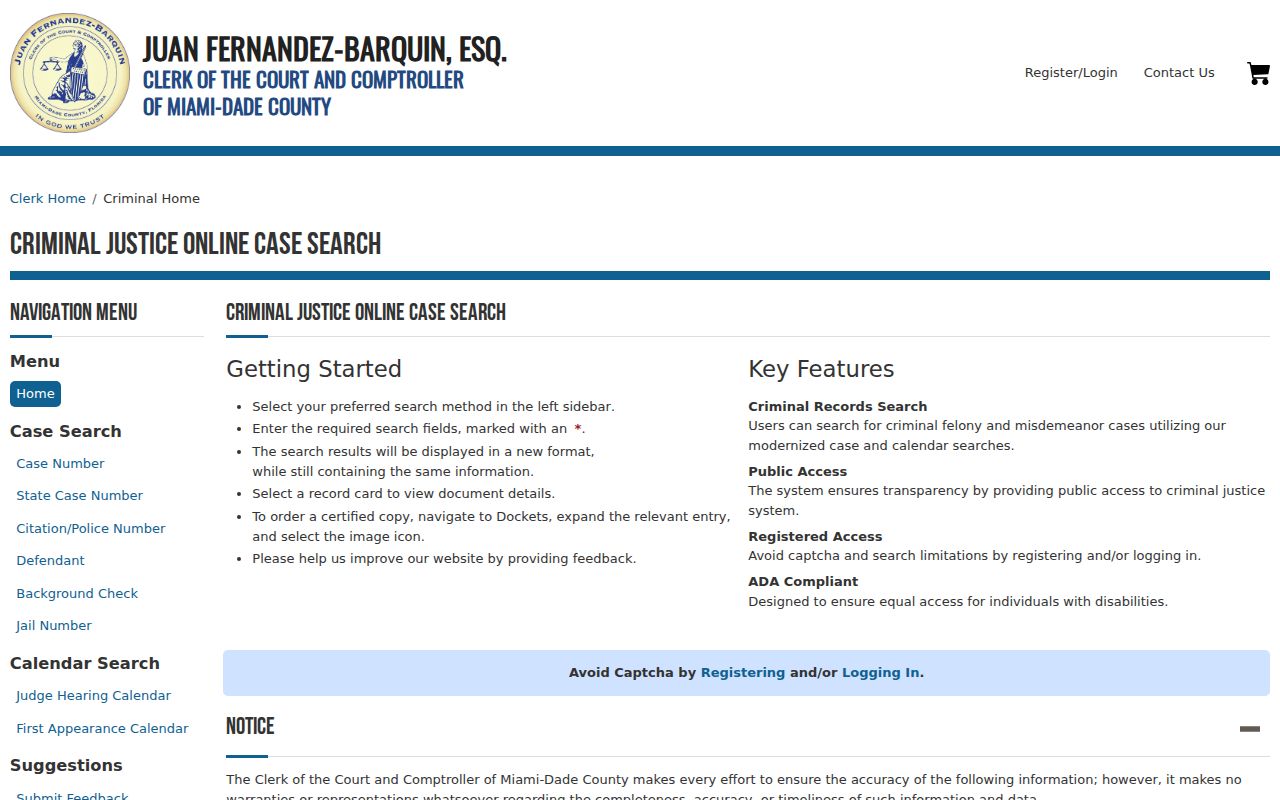
One caution from the Clerk: easy online access is not the official record itself. Read the filed charging document and the final disposition rather than treating a booking label as the last word.
- Booking
- The jail intake process and record made after an arrest.
- Bond
- A court-controlled condition or amount tied to release while a case is pending.
- Disposition
- The recorded outcome, such as dismissal, plea, verdict, or another final action.
- Detainer
- A request or hold connected to another authority; it is not proof of transfer.
Where Miami-Dade Records Live
Custody systems answer different questions. A county roster, state corrections profile, and federal locator cannot substitute for one another. Use the record stage shown below.
| Status | Best source | Photo status |
|---|---|---|
| Current county custody | MDCR in-custody search | Mugshot displayed |
| Released county booking | MDCR Central Records | Request the identified intake image |
| Police charge | MDSO or city police | Not the same as the jail image |
| Court outcome | Miami-Dade Clerk CJIS | Case documents, not a photo roster |
| State sentence or supervision | Florida Department of Corrections | Offender profile may show an image |
| Federal custody | Bureau of Prisons locator | No public inmate photograph |
| Immigration detention | ICE locator | No public booking photograph |
One person can pass through several of these systems in a matter of weeks. That movement does not merge the records. A detainer is not a transfer. A release is not a dismissal. And a state corrections profile is never the same thing as a fresh county arrest entry, even when both describe the same person.
Florida Offender Photo Search
The Florida Department of Corrections Offender Search handles the state prison stage. It covers sentenced prisoners plus certain FDC supervision cases. Search by first and last name. A six-character DC number works too. Aliases are searchable, and a photos-only filter exists. You can even hide photos on the results list. One caution: many people busted in Miami-Dade never enter this system at all.
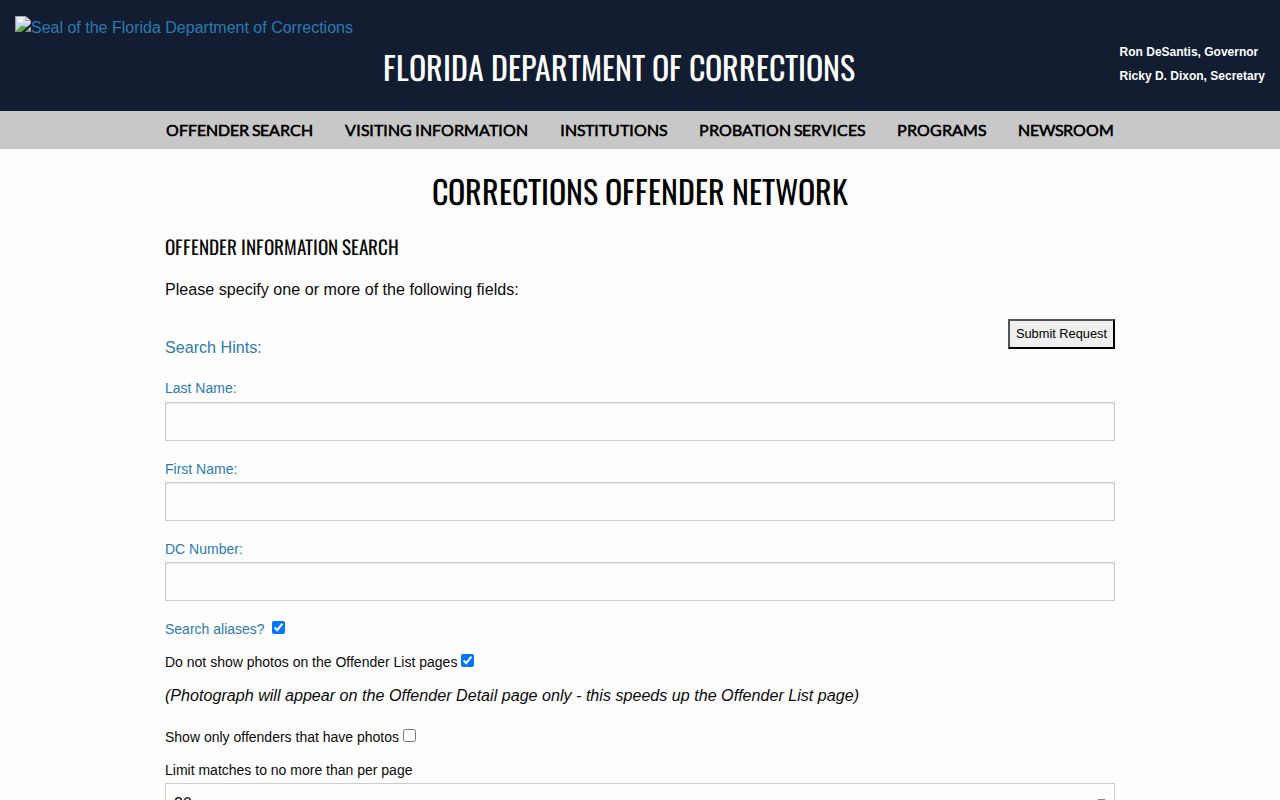
The FDC profile is a later corrections-stage record, not a same-day county booking source or a substitute for the Miami-Dade Clerk's disposition.
Miami-Dade Federal Custody Checks
The Federal Bureau of Prisons locator reaches federal inmates back to 1982. Enter a register number if you have one. A name plus optional demographics also works. Results show the holding facility and release details. No photograph appears. Federal pretrial defendants often sit in local jails under U.S. Marshals arrangements, so they may not appear as sentenced BOP prisoners yet.
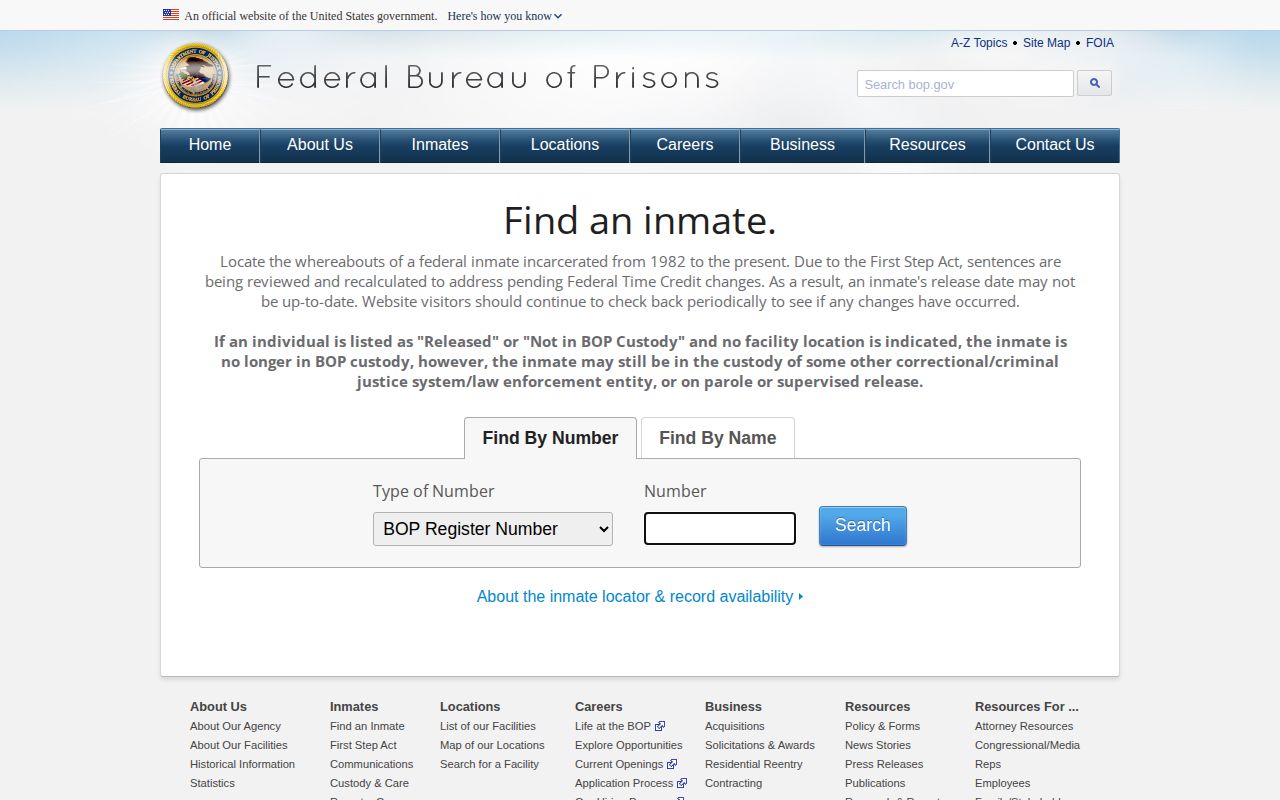
Do not treat the federal locator as a Miami-Dade booking roster. The avatar graphic it displays is not a mugshot. ICE runs its own detainee locator, which needs a nine-digit A-number with country of birth, or an exact name with country of birth. It shows no photos and excludes anyone under 18. An immigration hold in MDCR data does not mean the person is already in ICE hands. Check both systems on their own.
Where Busted Mugshots Surface
Official sources should anchor every search. MDCR is the county's live custody and photo source. Central Records keeps older booking material. The Clerk holds court outcomes, and FDC covers the state prison stage. News sites and commercial pages copy or select from these records, and they can lag behind later changes.
Local 10 local news posts frequent Miami-Dade crime stories, sometimes with a handful of images from police, arrest forms, inmate records, or courts. The Miami Herald, CBS News Miami, and NBC6 offer episodic coverage too. None of them amounts to a booking log.
Two verified commercial sites round out the picture. Busted Newspaper's Miami-Dade section posts booking-style entries with a free removal form. Mugshots.zone's Miami-Dade section publishes entries as well and offers a free correction or removal route. Both are unofficial. Coverage can be incomplete, delayed, duplicated, stale, or simply wrong, so confirm custody with MDCR and case outcomes with the Clerk.
RecentlyBooked's old Miami-Dade section was pulled and no longer resolves. Mugshots.com and Arrests.org had no genuine county section to find. Skip those routes rather than guessing at them, and never let a third-party photo stand in for an official record.
Older Miami-Dade Busted Records
The live MDCR roster is not an archive. Florida's GS2 schedule sets minimum retention periods for law-enforcement and corrections record series, but no single rule guarantees a mugshot survives for a fixed number of years. Agencies can keep records longer than the minimum. The right schedule item also depends on what you are after: an intake image, a booking report, an arrest report, a classification file, or a court record. The Florida records schedule hub is the official place to identify the correct series.
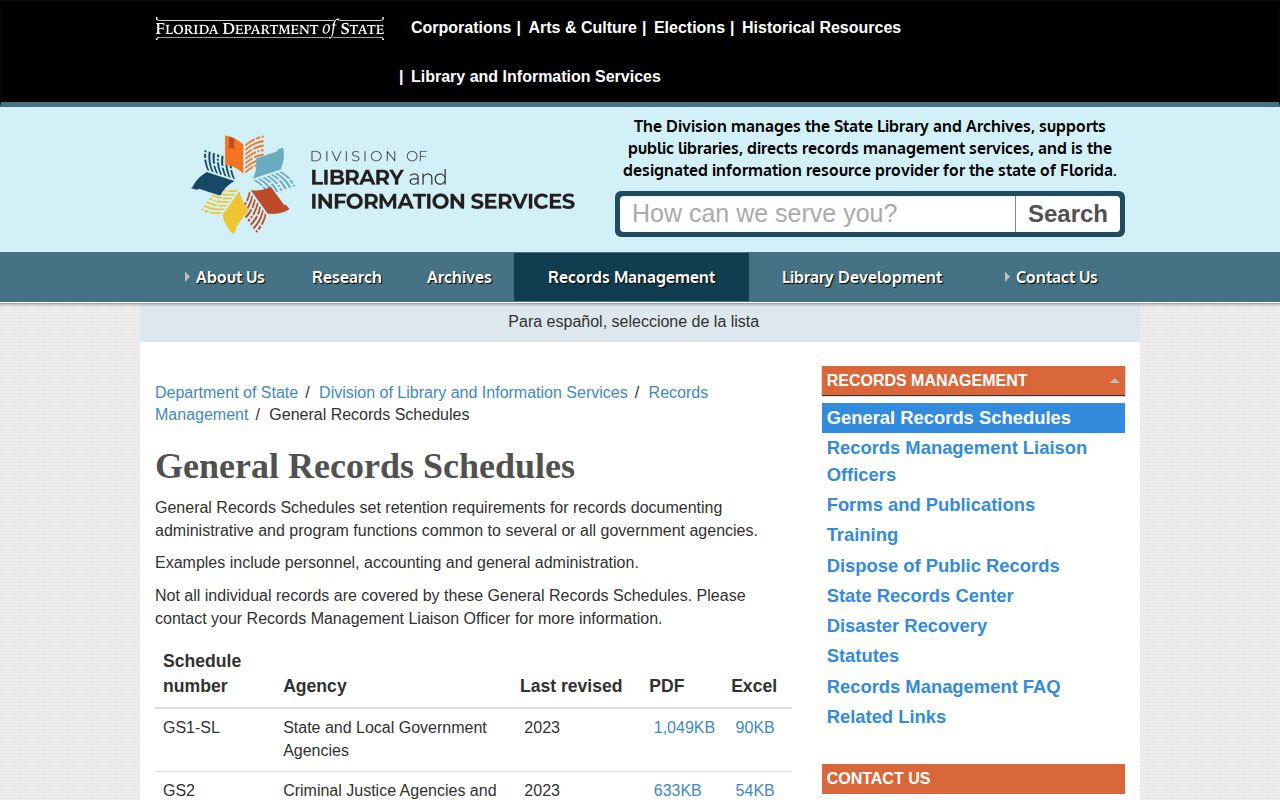
Retention rules set floors. They do not promise a booking photo stays searchable online for any fixed term. Start with MDCR Central Records and pin down one specific booking. Ask whether the record still exists, was lawfully destroyed, or moved. Get the schedule citation that applies. The arresting agency holds its own report. The Clerk keeps disposition documents. The Clerk Archives Unit preserves significant court and county material, though that does not mean every old booking photo lands there. Keep the agency name, record series, identifiers, and date span together so an old image does not get misidentified. The Miami-Dade Clerk Records Management page explains the local archive role.
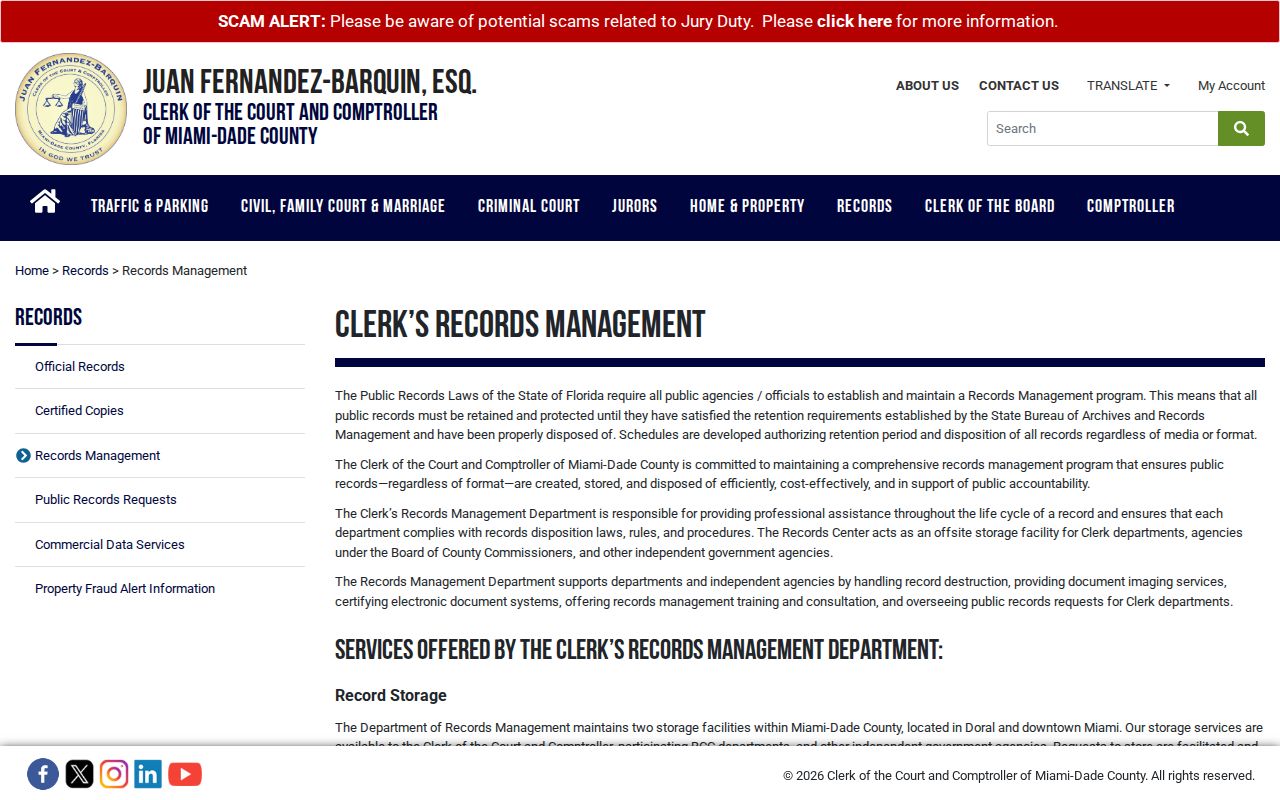
Treat the Clerk as an archival path after the primary custodian, not as a vault that automatically receives old intake images.
Busted Mugshots Across Miami-Dade
Miami-Dade's three largest cities run their own police departments. MDCR handles county jail intake at TGK. None of them was found to publish an official daily arrest or mugshot blotter. So each city search follows the same chain: police for the incident report, MDCR for current booking custody and the intake photo, then the Clerk for filed charges and the final disposition.
- Miami Busted Mugshots: City of Miami Police records lead to TGK and MDCR custody records.
- Hialeah Busted Mugshots: Hialeah Police reports remain separate from the county booking record.
- Miami Gardens Busted Mugshots: Miami Gardens Police records and MDCR intake require distinct requests.
A city name in a news story proves nothing. Neither does a mailing address. Neither shows which agency made the arrest. Collect three numbers as you go: the police case number, the MDCR jail number, and the Clerk case number. That trail beats any unofficial name search every time.